Is a Millennial Baby Boom Coming — or Just Catch-Up After the Pandemic Bust?
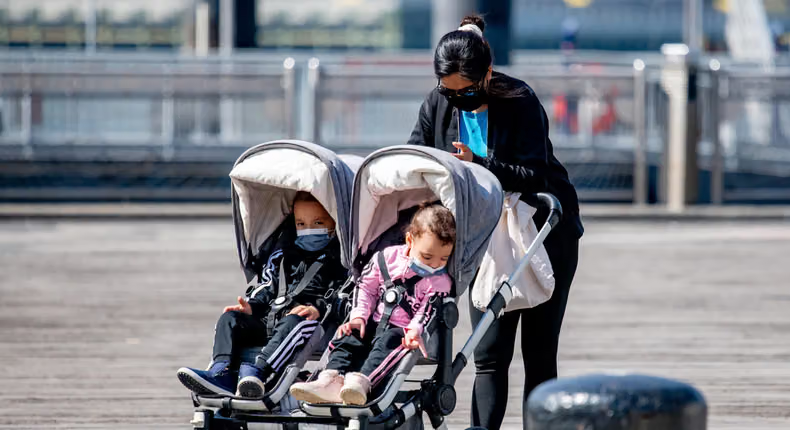
- After a pandemic “baby bust,” Americans are planning to have kids again and buying pregnancy tests.
- Bank of America said it could result in a millennial baby boom, but one expert said not so fast.
- She said it’s a temporary spike from delayed births and unlikely to affect long-term trends.
Here’s a cleaned-up rewrite of the article with the corrected timeline:
Bank of America Research data from the past six weeks shows renewed interest in starting families. Eleven percent of Americans said they were trying to have a baby within the next year, live births rose 3.3% from June 2020 to June 2021, and pregnancy-test sales climbed.
The figures arrive after a year many media outlets labeled a “baby bust.” A Centers for Disease Control and Prevention report earlier this year found that the U.S. birth rate fell 4% from 2019 to 2020—the sharpest single-year decline in nearly 50 years and the lowest number of births since 1979.
The news alarmed demographers, who warned of a longer-term crisis: an aging population without enough young workers to replace it. Birth rates often drop during economic stress, but the combination of recession and a global pandemic left experts uncertain about lasting effects.
Bank of America’s findings, led by a team under Robert F. Ohmes, appear to offer early reassurance. Rising pregnancy-test purchases and stated plans to start families suggest a potential millennial baby boom.
Jennifer D. Sciubba, a demographer and author of 8 Billion and Counting: How Sex, Death, and Migration Shape Our World, is less convinced. She sees the uptick as catch-up rather than a true reversal of the baby bust. Many people delayed childbearing during the pandemic and are now acting on those postponed plans, while others who would have had children around this time are doing so on schedule.
“I would guess that’s exactly what those two data points mean: Some people delayed, and now they’re done delaying,” she said.
Get used to fewer babies
The recent drop is not solely a pandemic effect. It continues a decades-long pattern in which successive cohorts of women have waited longer to have children, chosen smaller families, or opted out entirely.
This places the United States in line with other high-income countries and some middle-income ones, according to Christine Percheski, an associate professor of sociology at Northwestern University. Delaying childbirth, she has noted, reflects broader progress: greater access to education and jobs for women, rising individualism, increased female autonomy, and shifting values.
Sciubba points out that the average age at first birth rose from 21 in 1972 to 26 today. Teen births and fertility among immigrants—factors that once kept U.S. rates relatively high—have also reached new lows.
“Now, we look more like Europe in our fertility rate,” she said. “As far as long-term trends, U.S. fertility declines are here to stay.”
Brookings Institution research supports that view. The total fertility rate—the number of children a woman is expected to have over her lifetime—fell from 2.12 in 2007 to 1.64 in 2020, well below the 2.1 replacement level needed for a population to sustain itself without immigration. Brookings projections, based on simulated fertility patterns for women born between 1985 and 2000, indicate rates are likely to remain below replacement for the foreseeable future.
About The Author